
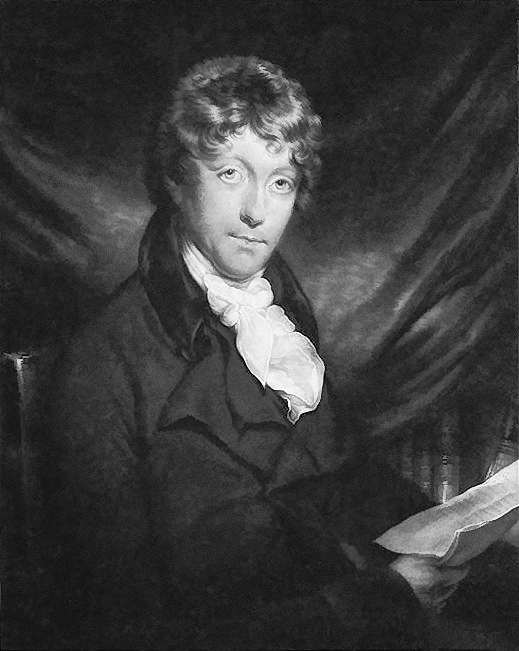
Sir William Garrow (1760 -1840)
You have probably never heard of Sir William Garrow. Don’t worry. Most people haven’t. Yet he is probably the one lawyer who has had the most profound effect on your legal rights as citizens.
It is hard to believe now, but as late as the 1770s, when Garrow came on the scene, an accused had no right to have a lawyer defend him in a criminal trial. This “no counsel rule” in English law had been in place for over 500 years. The theory behind this was that the prosecution was brought in the name of the Crown and it was not proper that anyone should oppose the King. Defendants were forced to defend themselves in court without any assistance. The whole purpose of the trial was to compel the defendant to speak in person about the charges and the evidence against him. The reason judges did not want lawyers representing defendants was because they would interfere with the the court’s ability to obtain information from the accused. They were afraid that barristers would take over the court room and be an impediment to the swift conviction and sentencing that was typical for the day. At that time courts would convict dozens of defendants in jury trials in a single day. The judges were right to be concerned.
Certain judges began to see this process this as a problem, especially in Felony cases where the punishment for almost every trial at the time was death. So, on occasion, a few judges began to allow counsel to cross examine witnesses for the accused. But the lawyers could only ask questions and could not address the jury. Into this environment stepped a young barrister, William Garrow.
Often called the father of the adversary criminal trial, Garrow was an aggressive cross-examiner and he pushed the limits of what he was technically allowed to do in representing his clients. One of the reasons judges cracked open the door to lawyers like Garrow is because the law relied heavily on a bounty system whereby if you accused someone of a crime and they were convicted you could receive a reward. This created a class of people known as “thief-takers”. These were people who attempted to profit off of false accusations and perjury. In one such case, Garrow was defending a man charged with theft with violence in the course of a highway robbery. The man who accused Garrow’s client was William Grove who testified against the accused. During trial testimony came out about there having been two robbers. Garrow dug further:
Garrow: Who were these two men, let us hear a little about them?
Grove: They are not here, they live at Sunbury, one is Humphries and the other Marchant.
Garrow: What business are they, are they not a sort of moonlight men? (thieves, robbers)
Grove: It was not moonlight.
Garrow: Are they not a couple of smugglers?
Grove: They may be as far as I know.
Garrow: So they told you they had been robbed?
Grove: Yes?
Garrow: Did they give any charge against Mr. Wingrove? (the accused)
Grove: I do not know what you mean by charges.
Garrow: I believe you do, you are pretty used to charges; did these two smugglers of yours give any charge against this prisoner?
Grove: They are no smugglers of mine.
Garrow: They are friends of yours?
Grove: They are no friends of mine.
Garrow: They, these two fellows, did they make any charge against Mr. Wingrove for robbing them?
Grove: Yes, they did make a charge.
Garrow: Do not shuffle Mr. Grove.
Grove: I do not know what you say.
Garrow: I will make you know directly; upon your oath, did not these two men attend the next day at Mr. Taylor’s and say that Mr. Wingrove was not one of the men who robbed them?
Grove: He is the man that robbed me, I will tell you the truth, he was the man that robbed me, I did not hear them say that he was not the man.
Garrow: That they swore?
Grove: Yes.
Garrow: Was he committed for robbing them?
Grove: No he was committed for robbing me.
Garrow: Who were the two men that robbed you a little while ago?
Grove: I never was robbed before.
Garrow: No, Mr. Grove!
Grove: Yes, I have been robbed, but I do not know who they were, and pilfered and too much robbed.
Garrow: I will put it now most unequivocally to you, and ask you upon your oath, whether you have never said to Mr. James Clarke by name, that you had been robbed some time since by two men, whom you have not prosecuted, who lived at Bentford; that they were good friends, and that if you called on them, at any time, you could have a guinea of them?
Grove: No, never in my life; no, no, they mistook, they came to me and wanted me not.
Hostetler and Braby, Sir William Garrow, His LIfe Times and Fight for Justice, Waterside Press 2010 pp. 52-53
At the conclusion, Garrow brought the point home.
Garrow: You know it is not every day that one gets forty pounds for hanging a man; had you any conversation at “The Cock” at Staines about the reward for the conviction.
Grove: You ask a hundred questions, I will answer you what I know; no, not about no reward, I have been there, and they may have been asking me about it, that is, we drank together, and I said to him, as I might say to you, I do not know anything about it. I did not say any such thing. I never said anything about any reward, that I can say. I have said nothing about no reward.
His efforts led to recognition of the right to counsel, the right to call witnesses in your own defense, the right to remain silent, the rules of evidence (created to put limits around what the lawyers could and could not do) and the presumption of innocence. Garrow is credited with inventing the phrase, “presumed innocent until proven guilty.”
Ibid.
You will be glad to know that the jury found Mr. Wingrove not guilty.
Garrow was something new that the bar had never seen before. His aggresive style in challenging prosecution witnesses made him feared. Others began to follow his lead. Trials changed. The “accused speaks” trial began to be replaced by the accused remains silent and lets his lawyer handle his defense. In one case where Garrow was defending a prisoner the client told the court, “I leave it to my counsel.” Garrow told his client, “You understand we cannot say anything to the Court or jury in your defense, we can only examine witnesses.” When the prisoner tried to ask a question, the Judge interrupted him, “God forbid that you should be hindered from saying anything in your defense, but if you have only questions to ask, I would advise you to leave it to your counsel.”
Previously judges, prosecutors and jury members had all been involved in the trial asking questions in round robin fashion. After Garrow, that type of trial was gone. Judges were no longer in charge and defendants began to have and assert rights that had never been recognized before. During Garrow’s life time, inquisitorial trials were replaced by adversarial trials, the kind we have to this day. Through his efforts, and the efforts of others, rights were created: the right to counsel, the right to remain silent, the right to cross-examine witnesses, the right to call your own witnesses in your defense, the rules of evidence and the presumption of innocence. In fact Garrow is credited with coining the phrase, “innocent until proven guilty.”
These rights are now enshrined in our constitution and law. But it is important to understand that these rights are not based on a constitution or some theory about human rights, their origin is from experience. They developed because good lawyers pushed back against an unjust system in the day to day work of representing clients. Your rights are not abstract. They were developed out of real life and real life needs of real people. They have not always existed. Protect them. As hard as it was to create them, they can be surrendered and given up very easily.
Sources: Sir Willaim Garrow: His Life Times, and Fight for Justice, Hostettler and Braby; The Origins of Adversary Criminal Trial, Langbein
 jmhogglaw.com